
19 Oct 2026
GSM on Clothing Labels: What the Number Actually Measures
GSM on Clothing Labels: What the Number Actually Measures
GSM means grams per square metre. It measures the mass of a defined area of fabric, not the weight of a finished hoodie or the thickness of an individual thread. A higher GSM figure means more fabric mass per area, but it does not independently prove warmth, softness or durability.
Read GSM together with fibre content, knit structure and finishing. Without those other details, the number is a narrow specification rather than a complete quality grade.
Understand what the measurement covers
A fabric rated at 400 GSM has a mass of 400 grams for one square metre of that material under the measurement conditions. It does not mean a hoodie made from it weighs 400 grams. The finished garment uses fabric over a larger area and adds ribbing, thread, hood layers and other components.
The ASTM D3776 family of methods addresses fabric mass per unit area. Its existence matters because a proper fabric weight figure comes from a defined measurement method. Comparing an unspecified number with a measured standard without checking context can be misleading.
Separate weight from thickness
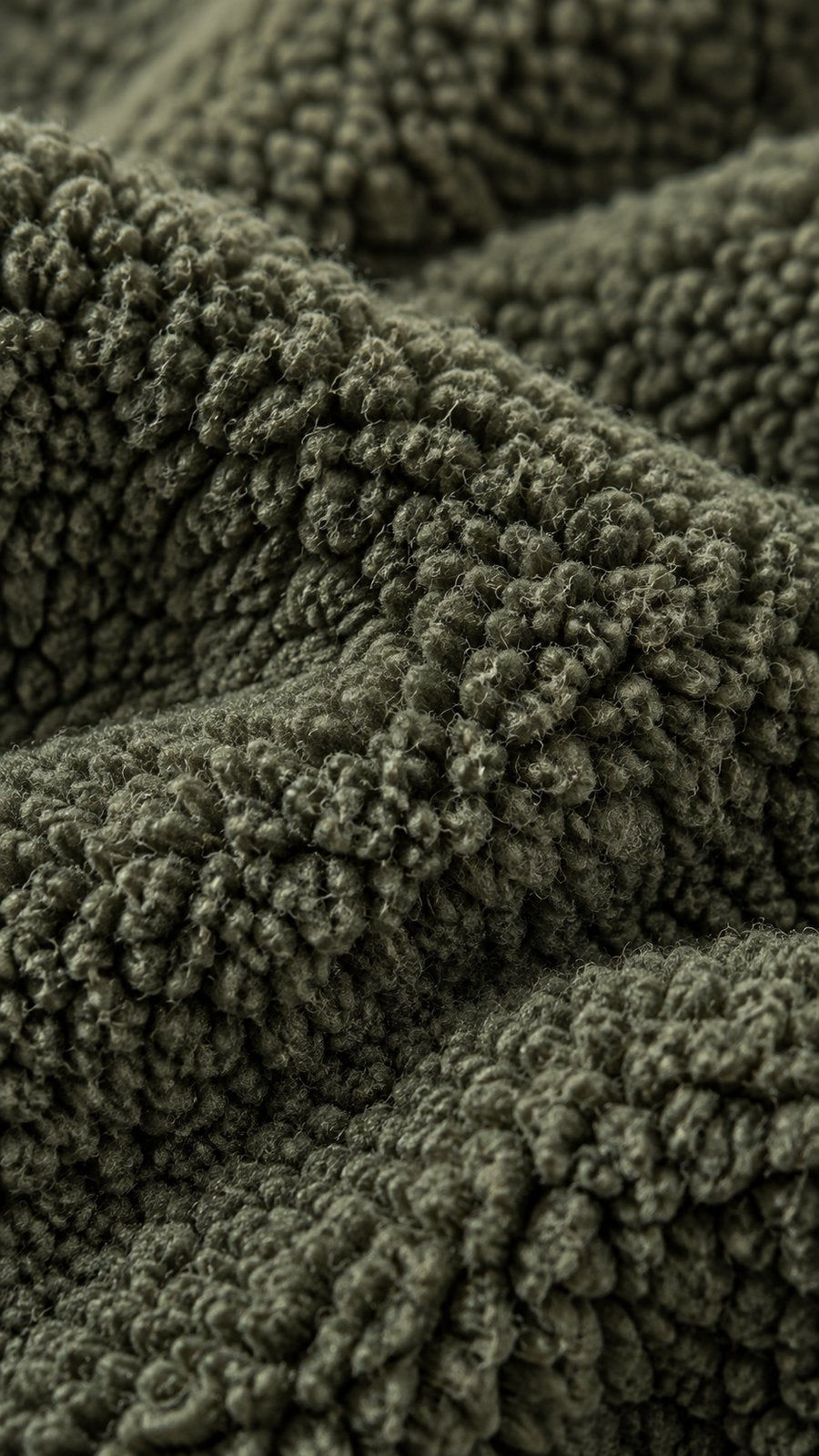
Imagine a compact knit and a lofted fleece with similar area mass. One may feel dense and relatively thin; the other may be thick because raised fibres hold extra air. GSM alone cannot show the height of pile or the firmness of the cloth.
Pinch a clean fold between finger and thumb and observe how it springs back. Then look at the inside surface. Dense construction, brushing and yarn size influence the feel in ways that a single numerical label cannot capture.

Use the number for a real comparison
GSM becomes useful when you compare similar materials intended for similar garments. A heavier version of the same basic knit generally contains more material per unit area, which can affect drape and handling. However, a loosely knitted cloth can behave differently from a compact one at an equivalent mass.
When reading listings in the hoodies and sweaters range, check whether the figure is explicitly provided. Do not estimate a GSM value by looking at a photograph or by weighing the complete hoodie on a kitchen scale.
Check the garment beyond the fabric roll
A double-layer hood can add more garment weight without any change to the GSM of the body cloth. Large sizes also use more fabric. Comparing complete garment weights therefore does not isolate fabric quality or density.
Look at cuffs, seams, hood construction and pattern area. A heavy body may be paired with lighter ribbing for recovery. Those details affect how the finished item sits and wears, while the area-mass figure describes only the material sampled.

Decide what GSM can actually answer
Use the figure to ask whether two comparable knits have similar mass per area. Use construction to judge stiffness and drape, the surface to understand pile, and your own fit reference to judge shape. Do not treat one large number as a complete performance promise.
For outer garments in the jackets collection, additional shell layers and insulation make a single body-fabric GSM even less informative. Read the construction before comparing a jacket with a plain sweatshirt.

Frequently Asked Questions
Does 400 GSM mean a hoodie weighs 400 grams?
No. The number is grams per square metre of fabric, not finished garment weight. Garment area and extra components change the total mass.
Is a 500 GSM hoodie automatically warmer than a 350 GSM one?
No. Warmth also depends on the construction, trapped air, fit and other layers. GSM describes area mass only.
Can I work out GSM with a bathroom scale?
Not reliably from a finished garment. Professional measurement uses a defined fabric area and procedure.
Why can two fabrics with equal GSM feel different?
Fibre, knitting, brushing and finishing change their handle and thickness. Equal mass does not mean equal structure.
Is GSM useful for comparing jacket shells?
It can compare similar fabrics, but finished outerwear depends on coatings, linings and insulation as well. Do not use GSM as a sole ranking.