
29 Oct 2026
Half-Zip Versus Full-Zip Tops During Movement
Half-Zip Versus Full-Zip Tops During Movement
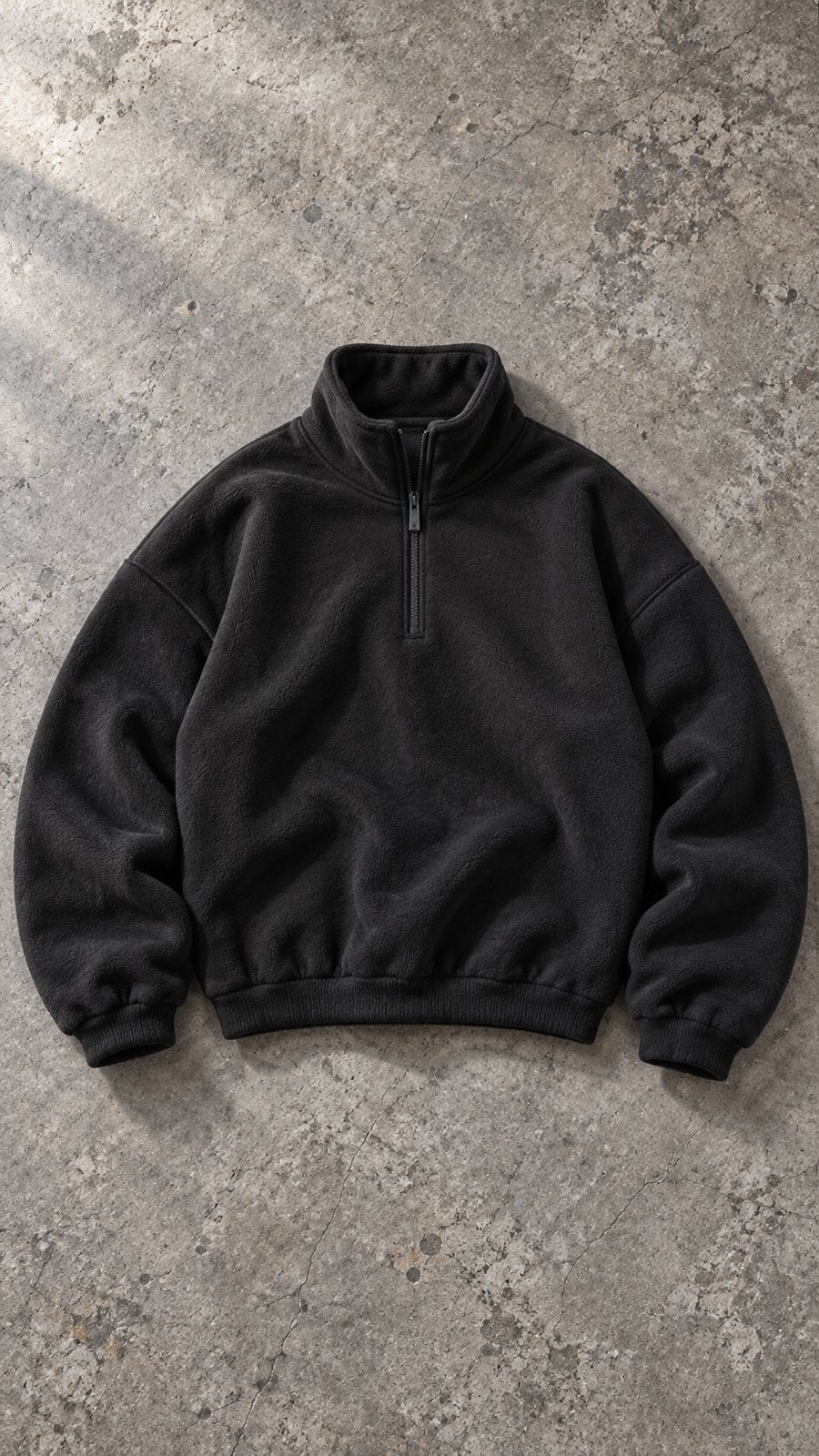
A half-zip track top opens only the neckline and upper chest. A full-zip version opens the entire front. That difference changes ventilation, how quickly you can remove the garment and how the front panels sit while moving.
Compare the openings in the same fabric weight. Zip length is a pattern choice rather than a simple ranking of one top as more technical.
Locate the lower stop of the zip
On a half-zip top, the lower stop sits somewhere on the chest. The front body continues as one panel below it. A full zip separates the front from collar to hem. Look at the placement of the zip tape and whether the fabric is reinforced at its lower end.
A lower stop that sits high provides a smaller opening at the chest. A longer half zip exposes more area without separating the whole garment. Measure the opening rather than treating every half-zip as identical.
Use the openings for ventilation
Lowering the zip allows air to move through the front. With a half-zip, the fabric remains joined below the stop. With a full zip, you can open the jacket completely and let the two front panels fall apart.
Ventilation also depends on the cloth and activity level. One large opening cannot make a completely non-breathable fabric behave exactly like a more open knit, but it gives you a practical way to regulate heat during motion.

Compare ease of taking the top off
A full-zip track jacket can be removed without passing the collar over your head. A half-zip pullover still needs to be lifted over the head, though the opening can make that easier than a completely closed neckline.
If you often add or remove a mid layer, this practical difference may matter more than the appearance of the front. Check whether the hood or collar rubs the face while removing the pullover.
Judge the front silhouette
A full zip forms a continuous vertical line and can frame an inner T-shirt when open. A half zip interrupts that line on the chest and leaves a broad uninterrupted lower torso. The two shapes remain different even with identical cuffs and side panels.
Compare upper pieces from the tracksuits collection and a separate hoodie or sweater worn beneath them. The zip opening determines how much of the inner layer can be shown.

Test the closure while reaching
Zip both types to your normal neckline height and lift your arms. Watch whether tension gathers at the chest stop on the half-zip or along the full zip tape. A stiff centre panel can change how fabric folds during movement.
Comfort depends on collar height, body ease and sleeve shape in addition to zip length. Decide based on the entire garment rather than choosing the longest fastening by default.
Compare neck airflow with each design worn over the same base shirt. A half-zip opens only the upper chest and cannot split the full body panel. A full-zip top can be removed without pulling it over the head, but it also carries a longer closure across the front. Test each zip while seated and standing. The correct choice depends on how often you adjust layers during movement.

Frequently Asked Questions
Does a half zip open all the way to the hem?
No. It opens only part of the front and retains a connected body panel below the lower stop.
Can a full zip provide more ventilation?
It allows the full front to open, which offers more adjustment. Fabric and conditions still affect comfort.
Is a half-zip top harder to remove?
It must be lifted over the head, unlike a fully separating jacket. Opening the short zip can make the neckline wider.
Does a half zip require a stand collar?
No. Collar shapes vary by design. The defining feature is the length of the front opening.
Which zip works better for layering?
Choose by how often you need to remove the top and how much inner clothing you want exposed. Test shoulder room as well.
Related reading: Full Tracksuit or Separates: When Each Looks Intentional and Zipped Ankles Versus Fixed Leg Openings.