20 Oct 2026
Heavyweight Versus Midweight: What Changes on the Body?
Heavyweight Versus Midweight: What Changes on the Body?
Heavyweight and midweight describe different amounts of material per fabric area, but the wearer feels the difference through drape, bulk and movement. A dense heavyweight sweatshirt can hold a sharper outline. A lighter knit may fold more readily along the body.
Compare similar fabric types under the same conditions. Weight labels are useful starting points, not universal categories with fixed boundaries.
Feel how the fabric bends
Hang two sweatshirts on identical hangers and look at the lower sleeves. A heavier compact knit may form broader folds instead of many small creases. A lighter fabric can settle closer to the arm and reveal more of the shape beneath it.
Now fold each sleeve over your hand. The pressure and resistance you feel come from more than GSM: yarn, knit density and finishes alter stiffness. Describe what the cloth actually does rather than assuming any heavy material must be rigid.
Look at the collar and hood
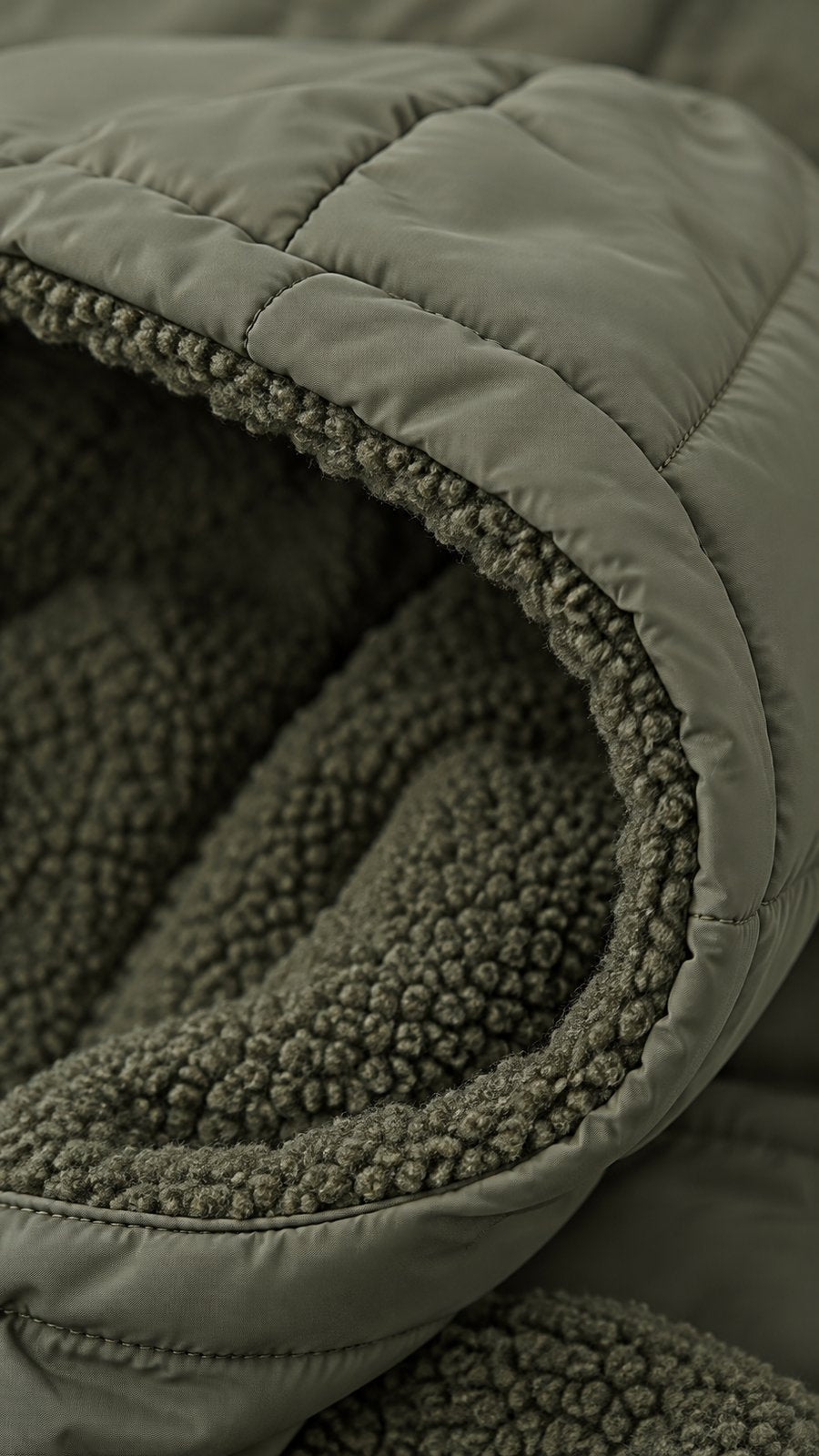
A dense hood may stand farther away from the neck when down. A lighter hood may collapse into flatter folds. With the garment on, check whether the hood shifts the neckline backward or adds noticeable bulk beneath a jacket.
The same question applies to a high ribbed collar. Thick body cloth next to a more elastic rib can create a strong boundary. Notice the transition between panels rather than judging the fabric from one large flat area.

Account for layered outfits
A heavyweight hoodie occupies more space beneath a narrow shell if its bulk is greater. The shoulder seams and elbow folds are common pressure points. A midweight knit can slide beneath the same outer jacket with less bunching, depending on cut.
Test combinations between the hoodies and sweaters range and the jackets category with arm movements, not simply front photographs. Extra fabric mass is useful only if the layers remain comfortable to wear.
Do not confuse weight with insulation
Warmth depends heavily on trapped air and wind exposure. A brushed-back knit may feel insulating at a lower area mass than a compact smooth-faced fabric because its raised fibres create extra air spaces. A heavy unlined outer layer may still let cold air reach the body through open cuffs.
When reading a product description, seek information on the inside face and construction. Weight without those facts cannot tell you how the garment responds in cold weather.

Choose by use and silhouette
Pick a fabric that keeps the outline you want during ordinary movement. For a square top, watch whether side seams remain relatively straight when the arms hang. For a soft draped look, check how the fabric falls from shoulder to waist.
There is no single correct number for streetwear. Assess shoulder room, hem behavior and whether you will wear another layer above the garment. A fabric classification becomes meaningful only when tied to that practical use.
A fabric weight number is useful only when paired with its material and structure. Two tops with equal grams per square metre can feel unlike each other because one is tightly knitted and the other has a raised inner face. Put them flat, lift one corner and let it drop. Notice whether it holds a broad fold or collapses into smaller creases. Weight and drape describe separate properties. Measure the weight of a known area if you have proper equipment, but do not estimate GSM from the feel of a complete hoodie. Hardware, ribbing and cut change the total mass.

Frequently Asked Questions
Does heavyweight always mean better quality?
No. Area mass is one property. Stitching, material structure and suitable construction matter separately.
Will a midweight hoodie always feel cooler?
No. Surface brushing, wind exposure and the rest of the outfit also affect warmth.
Is heavy cloth less stretchy?
Not necessarily. Knit structure and fibre content determine stretch as well as weight.
Why does a heavyweight sleeve make fewer sharp folds?
Its construction may resist bending more strongly, producing broader folds. Different heavy knits still behave differently.
Should I wear heavyweight sweatshirts under fitted jackets?
Check actual sleeve and armhole clearance. Some combinations work; others bunch at the elbows and shoulders.
Related reading: GSM on Clothing Labels: What the Number Actually Measures and Measure a Hoodie Chest Without Guessing the Size.