
21 Oct 2026
Boxy Versus Fitted: Read the Silhouette From a Distance
Boxy Versus Fitted: Read the Silhouette From a Distance
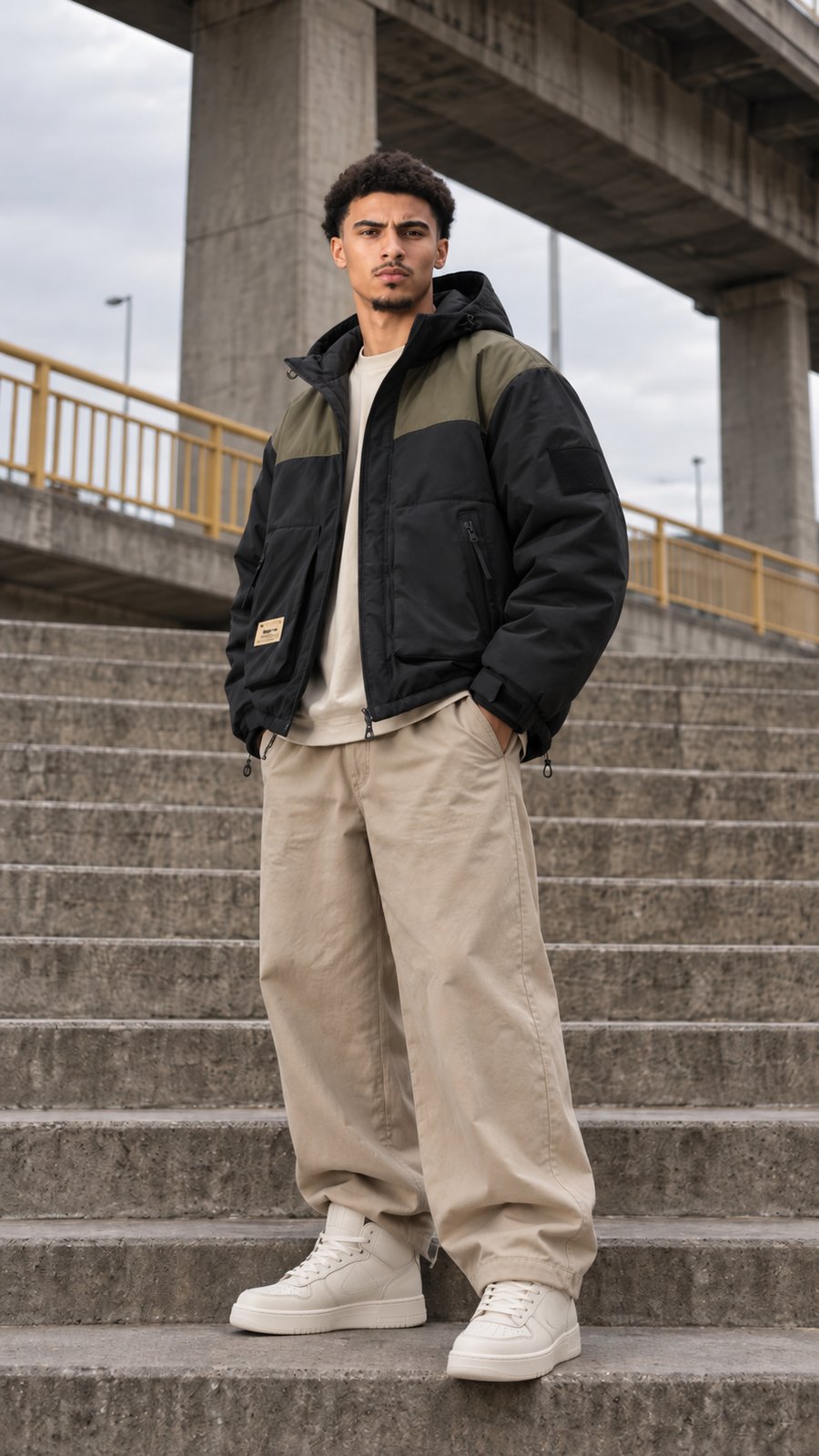
A boxy garment reads as a broad rectangle, while a fitted one follows more of the body's outline. You can spot the difference from a distance by comparing shoulder width, torso width and hem position before looking for logos or small details.
Neither cut is automatically larger in every measurement. A boxy top may be short through the body even when its chest is wide. Look at its overall boundary, not the size label.
Look at the shoulder boundary first
Stand several steps away from a person wearing the top, or take a straight-on photograph. Locate the furthest visible point on each shoulder. On a fitted top, this line stays closer to the anatomical shoulder. A boxy one can extend outward through a relaxed or dropped seam, changing the width above the chest.
Do not judge shoulder width by the cuff position. A wide sleeve can make the arm look broader even when the torso seam is conventional. Identify the shoulder join before deciding which part creates the rectangle.
Read the space beside the waist
A fitted body narrows or closely follows the area between chest and hem. A boxy body keeps more room through the waist, so its sides look straighter. Turn the person to a side profile: you may see a vertical drop from chest to hem rather than a curve back toward the stomach.
This is a garment outline, not a judgement about anyone's physique. The Museum at FIT documents how clothing alters perceived proportions across different fashion periods. You can use the same visual method without attaching a body ideal to it.

Compare garments at the same scale
Place two plain tops side by side, align the neck points and photograph them at equal distance. One can measure much wider at the underarm while ending at the same height. Another may share chest width but extend farther below the hip. Those combinations create different silhouettes despite looking similarly large on a hanger.
Look through the hoodies and sweaters category for chest-to-length relationships, not just a tag that says oversized. A rectangle is a ratio between dimensions.
Do not confuse baggy sleeves with a baggy body
Some tops use extra width in the sleeve alone. From the front, the arms create a wide outer outline while the torso still follows the waist. A genuinely boxy body maintains its width across more of the trunk. Fold each sleeve inward on a flat garment to isolate the main body rectangle.
This check also helps when comparing outerwear in the jackets range. A puffer can look very full because of insulation even when its pattern is not especially wide.

Decide with a single reference image
Take a front-facing photograph of your favourite fitted top and another of a wide one, using the same camera position. Mark the top edge, the waist area and the hem as three reference levels. You will quickly see which part creates the difference you actually prefer.
Use that visual observation together with measurements. A photo shows the outline, while chest width and body length tell you whether a new piece can reproduce it. Neither method needs a brand claim or a universal rule about which cut looks better.

Frequently Asked Questions
Can a cropped top still be boxy?
Yes. A short body combined with generous chest width creates a strong rectangular shape. Cropped refers to length, while boxy describes the relationship of dimensions.
Is a fitted hoodie always tighter at the sleeves?
No. Sleeve and torso shapes can be cut independently. Examine each section of the pattern before assuming the whole garment is close-fitting.
Does body shape determine whether boxy clothes work?
The visual result depends on the garment proportions and how you choose to wear them. There is no single body shape required for a broad silhouette.
How far away should I stand to compare two cuts?
Use enough distance to see the whole outfit at once and keep it equal for both images. Close-ups exaggerate details while hiding the overall outline.
Does a puffer count as boxy because it is thick?
Not automatically. Padding adds volume outward. Compare the underlying chest-to-length pattern as well as the insulated thickness.
Related reading: Measure a Hoodie Chest Without Guessing the Size and Heavyweight Versus Midweight: What Changes on the Body?.