07 Nov 2026
Vertical Lines Versus Horizontal Lines in Outerwear
Vertical Lines Versus Horizontal Lines in Outerwear
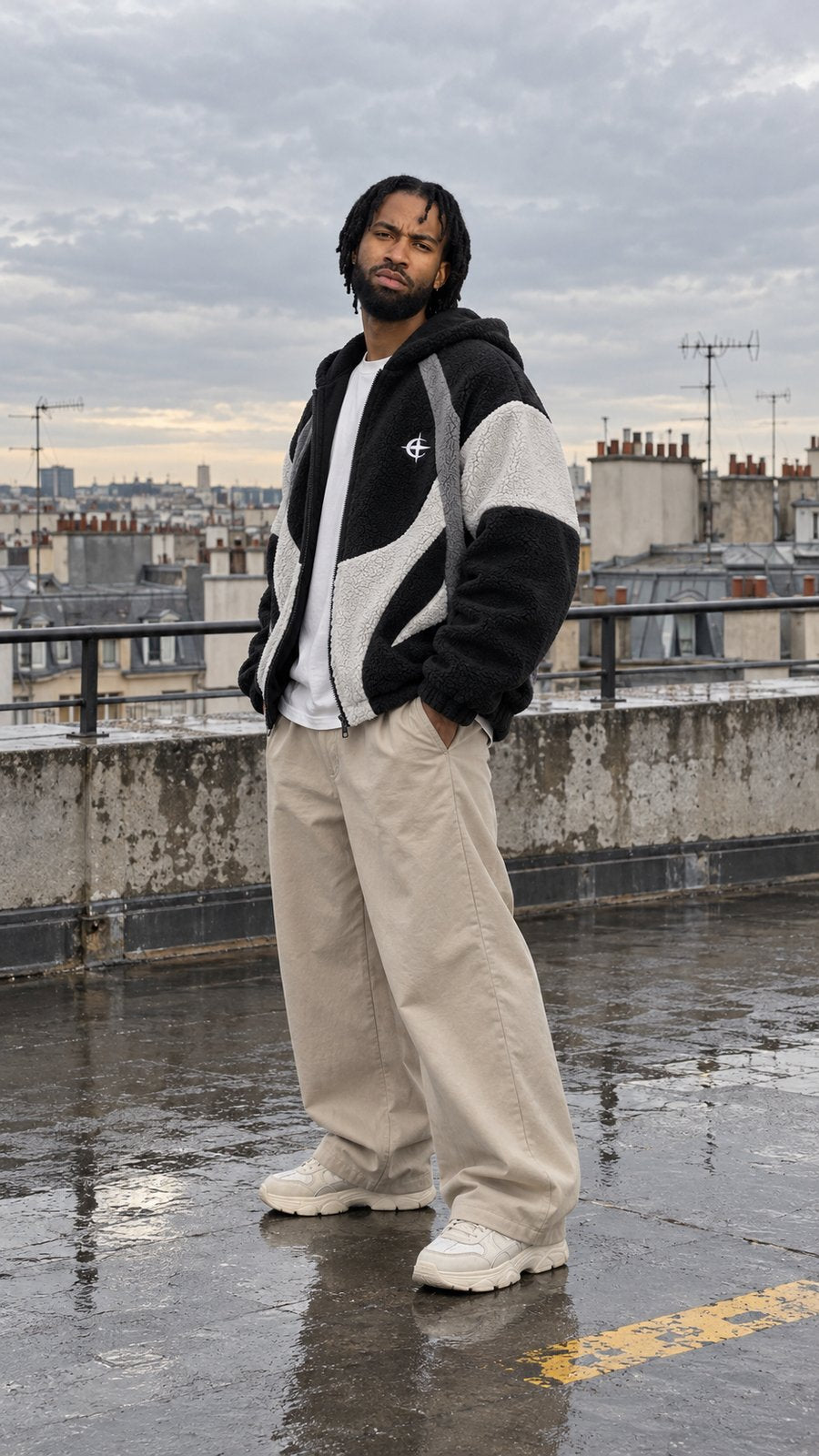
A vertical seam and a horizontal panel divide outerwear in different directions. Long lines encourage the eye to follow the garment from shoulder toward hem. Lines across the chest or sleeves create visible levels across the body.
This describes visual organization, not a guaranteed illusion that a person becomes taller or wider. Placement, contrast and the real garment outline determine the result.
Trace what actually forms the line
Before interpreting a panel, identify whether it is a stitched seam, applied tape, piping or a printed stripe. A seam joins fabric panels. Tape may cover a seam or simply decorate the surface. A printed line can mimic construction without changing it.
Turn the garment inside out when possible. A structural join has seam allowances or a finishing method on the inner face. That distinction tells you whether the line follows a pattern piece or has been added afterward.
Compare uninterrupted vertical panels
A side panel running from underarm toward the hem creates a continuous dark or light strip. When it is close in tone to the body, the line can be subtle. High contrast makes the boundary clearer, even though the jacket's outside measurement stays identical.
Look at the zip front as another vertical line. When it is open, the inner top creates two additional edges. Closing the zip removes those lines and may make side panels more prominent.

Read horizontal cuts as levels
A yoke across the shoulders, a stripe around the sleeve and a seam across the upper chest divide the garment into bands. They can make it easier to see where the shoulder ends and the torso begins. The effect depends on whether the band crosses the whole width or stops at a pocket.
If a panel is reinforced, it may also serve a construction purpose. Do not infer reinforcement from colour alone. Examine stitching, extra layers and placement on the inside.
Use equal-scale comparisons
Place two jackets side by side at the same distance. One has long uninterrupted side panels; the other has a contrasting upper chest yoke. Focus on how the eye moves along each shape before introducing trousers or accessories.
Within the jackets collection, compare real seam paths. A bomber jacket may use ribbed edges that create additional strong horizontal lines even with a simple body panel arrangement.

Check movement before praising a panel
A curved seam at the shoulder could follow an ergonomic pattern, but its visual curve does not prove increased mobility. Reach forward and overhead to see what the panel allows. Extra stitching can also add bulk in the wrong place if the garment layers tightly.
The useful question is what the panel physically joins and what silhouette it creates. Keep those answers separate. A striking contrast shape is not technical performance evidence by itself.
A useful construction check is to put a small removable marker at the start and end of a visible line. If the markers sit on one continuous piece of fabric with no inner seam, you are likely looking at an applied or printed feature. If the line tracks an actual joined edge, the pattern uses separate sections. This matters when describing technical clothing: a stripe can guide the eye without providing reinforcement or extra movement.

Frequently Asked Questions
Does a vertical stripe make everyone look taller?
There is no reliable universal rule. Garment shape, stripe placement and the whole outfit influence the visual reading.
Is a contrast panel always a functional seam?
No. It may be printed or applied over the fabric. Inspect the inner construction to distinguish decoration from a joined panel.
What is a yoke on a jacket?
It is a panel that typically occupies an upper section such as the shoulders or back. Its placement creates a visible seam boundary.
Does a horizontal stripe change actual jacket width?
No. It changes the visible division of the surface, while the sewn dimensions remain the same.
Can seam placement affect arm mobility?
It can, depending on pattern shape and fabric. Test movement instead of assuming that a curved seam must be functional.
Related reading: The Shoulder-to-Waist Line Shapes an Outfit and Oversized Is a Shape, Not Just a Larger Label.